August 31, 2026
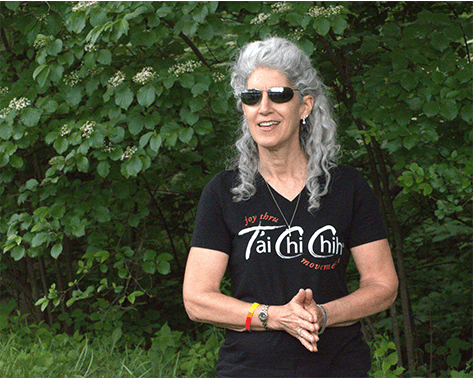
I'm pushing 65 myself now, and after 20-plus years working as a Master Personal Trainer, a Certified Nutritional Counselor, and an Accredited T'ai Chi Chih Instructor, you can imagine how many clients and students have come to me with issues and concerns related to aging.
Of those I've worked with in their 80s, I've noticed something striking: while some are frail and afraid, others are straighter and more confident than people half their age. They're still skiing, gardening, or picking up grandchildren without a second thought.
So with both confidence and authority I can tell you that the gap between those two groups is neither luck nor genetics alone. The same patterns keep showing up in the people who are thriving. Here's what they have in common (note that the most important reasons — the ones you might least expect — are lower down the list):
1. They never stopped moving. The strongest 80 year olds I've worked with didn't start exercising at 79. They simply never quit. There may have been a busy stretch, an injury, a hard year — but movement always came back, because it was part of who they were, not a program they were on. Maybe they had movement-based careers: contracting, farming, carrying mail. Or maybe they were just committed to T'ai Chi Chih and a daily walk during their lunchbreak. The body honors that kind of consistency. Decades of regular, ordinary movement leave a margin of strength and capacity that a sedentary and frightened body simply doesn't have.
2. They kept "lifting" something heavy. Almost none of them would call themselves weightlifters, but the ones who stayed strong kept asking their muscles to work against real resistance. In carrying, climbing, hauling, digging, or actual strength training (even just with bodyweight-only or band exercises) the form mattered less than the fact that they kept loading their muscles and bones well into later life. And the people who protected both over time are the ones I've seen still standing tall in their 80s.
3. They make their own meals most of the time. And those meals are composed of WHOLE, local, seasonal, healthily gown food. Because every single thing we put in our mouths either builds up our health or breaks it down ... that's simply a biological fact.
4. They commenced practicing a stress reduction practice they deeply enjoy long ago. If you still have any doubt that the body-mind-spirit connection is real, next time you feel scared or tense just take a moment to notice your breathing and your posture. Thriving 80 year olds never ignor stresses (or certainly past trauma) with the potential to mimic or even cause disease ... they address it head on by practicing T'ai Chi Chih, Qigong, Yoga (or any mind-body practice they truly resonnate with.)
5. They trained — and thereby protected — their ability to balance. Falls are the event that literally ends independence for many older adults, so the people who age well protect their balance like their property. They get down on the floor (a great way to help the body remember how to continually find a way back up.) They walk on uneven ground instead of avoiding it. They dance, they run, they garden seriously. They don't surrender their stability to fear and a recliner. Balance fades quietly when you stop challenging it … don’t give it the opportunity to fade!
6. They stayed connected to other people. The thriving 80 year olds I've worked with are almost never isolated. They might not still have a spouse, but they have a circle of friends, a community, a reason to leave the house and be among others. Loneliness isn't just sad, it's physically corrosive, and I've watched it accelerate human decline, especially after the death of a spouse. The people who kept even a few relationships alive across the decades (even across distance when necessary) arrive in my classes or offices with something the isolated ones have lost.
7. They have a reason to get up in the morning. A sense of purpose is crucial, and it drives meaning. My clients and students who age best are “aimed” at something — an activity, a project, a person, a role, a craft, a cause. They are committed to something, or are needed by something or someone. That sense of "mattering" pulls them through the hard moments and keeps them from quietly folding in on themselves. When I ask what they're looking forward to, they have an answer. That matters more than you could imagine. Think … what’s getting you out of bed in the morning? There should be a serious, immediate answer.
8. They take problems seriously, early. When something starts to go wrong — a sore hip, a stumble, a new weakness — the ones who do well don't just assume or hope it'll resolve on its own. They address it while it's still small, while it's still reversible. They understand, intuitively, what years of this work have taught me: a fall leads to a fracture, a fracture leads to bed rest, bed rest leads to weakness, and weakness leads to the next fall.
9. They made peace with getting older, without surrendering to it. The strongest 80 year olds I know have a realistic, balanced attitude about their age. They don't pretend to be 40, but they refuse to use age as an excuse to stop. They modify, adapt, and then keep going. They know the difference between an honest limitation and a self-imposed one, and they spend their energy on what's still within their control. Movement is medicine, but so is this particular mindset.
Note, however, that none of the above requires perfect genes, or certainly a perfect life. It's just about pointing yourself in the right direction and staying the course long enough for it to matter. The 80-somethings I admire most weren't born different, they made a thousand small choices, over decades, to move well, eat well, and relax really well, AND THOSE CHOICES SIMPLY COMPOUNDED IN THEIR FAVOR.
And BTW whether you realize it or not, you're already making pivotal choices right now as well. So make GOOD choices … it's never too late nor too early to begin, and your 80+ year old self will thank you!!!